Bhadravati (also spelled Bhadravathi) is a historically significant industrial town and taluk headquarters located in the Shivamogga (Shimoga) District of Karnataka. Positioned along the banks of the Bhadra River, the town is known for its pioneering role in India’s early industrial development, particularly in iron, steel, and paper manufacturing. Over time, Bhadravati has evolved into a well-established urban center that combines industrial heritage, cultural richness, educational growth, and ecological surroundings.Often referred to as one of the earliest planned industrial towns in Karnataka, Bhadravati continues to play a vital role in the region’s economy and social structure.
Historical Evolution
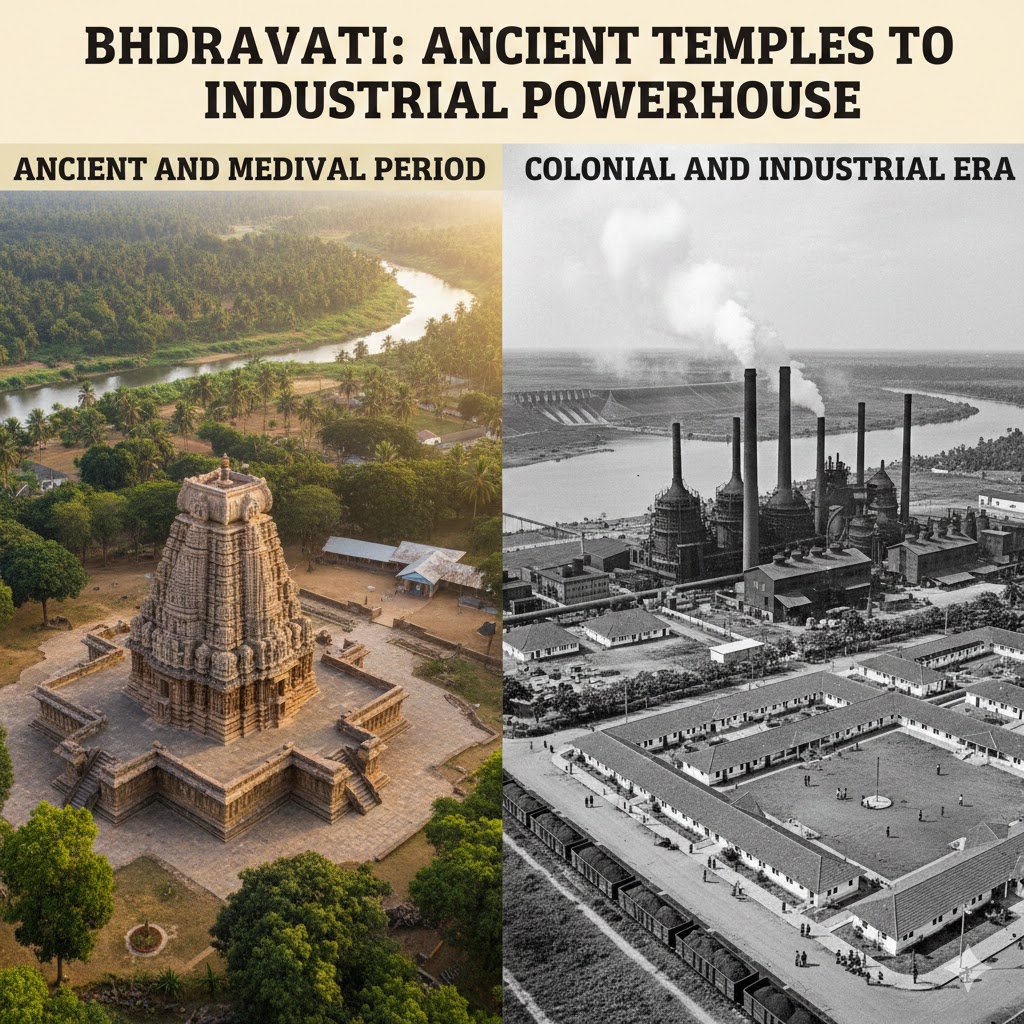
Ancient and Medieval Period
The history of Bhadravati can be traced back to ancient times, when the region was covered by dense forests and inhabited by agrarian and tribal communities. The area was ruled by several South Indian dynasties, including the Kadambas, Chalukyas, Hoysalas, and later the Vijayanagara Empire.
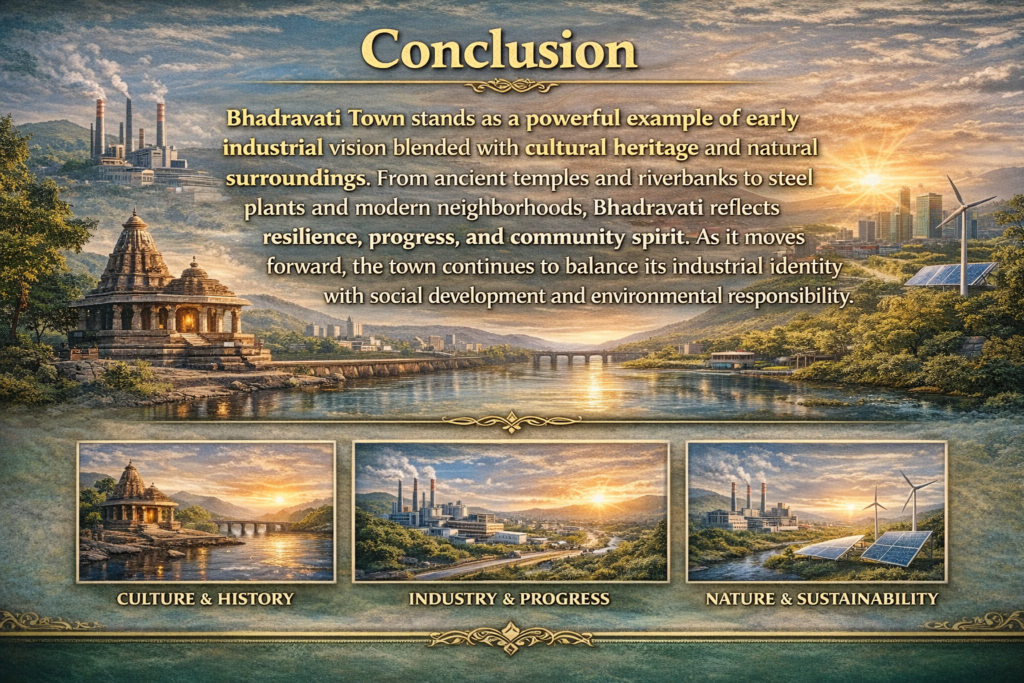
One of the most remarkable reminders of this era is the Lakshmi Narasimha Temple, built in the 13th century during the Hoysala period. The temple is renowned for its intricate carvings, star-shaped platform, and fine craftsmanship, reflecting the architectural excellence of medieval Karnataka.
Colonial and Industrial Era
A defining chapter in Bhadravati’s history began in the early 20th century, when the princely state of Mysore recognized the region’s potential for industrial development. The availability of:
Iron ore in nearby regions
Abundant water from the Bhadra River
Hydroelectric power
Geographical & Climate
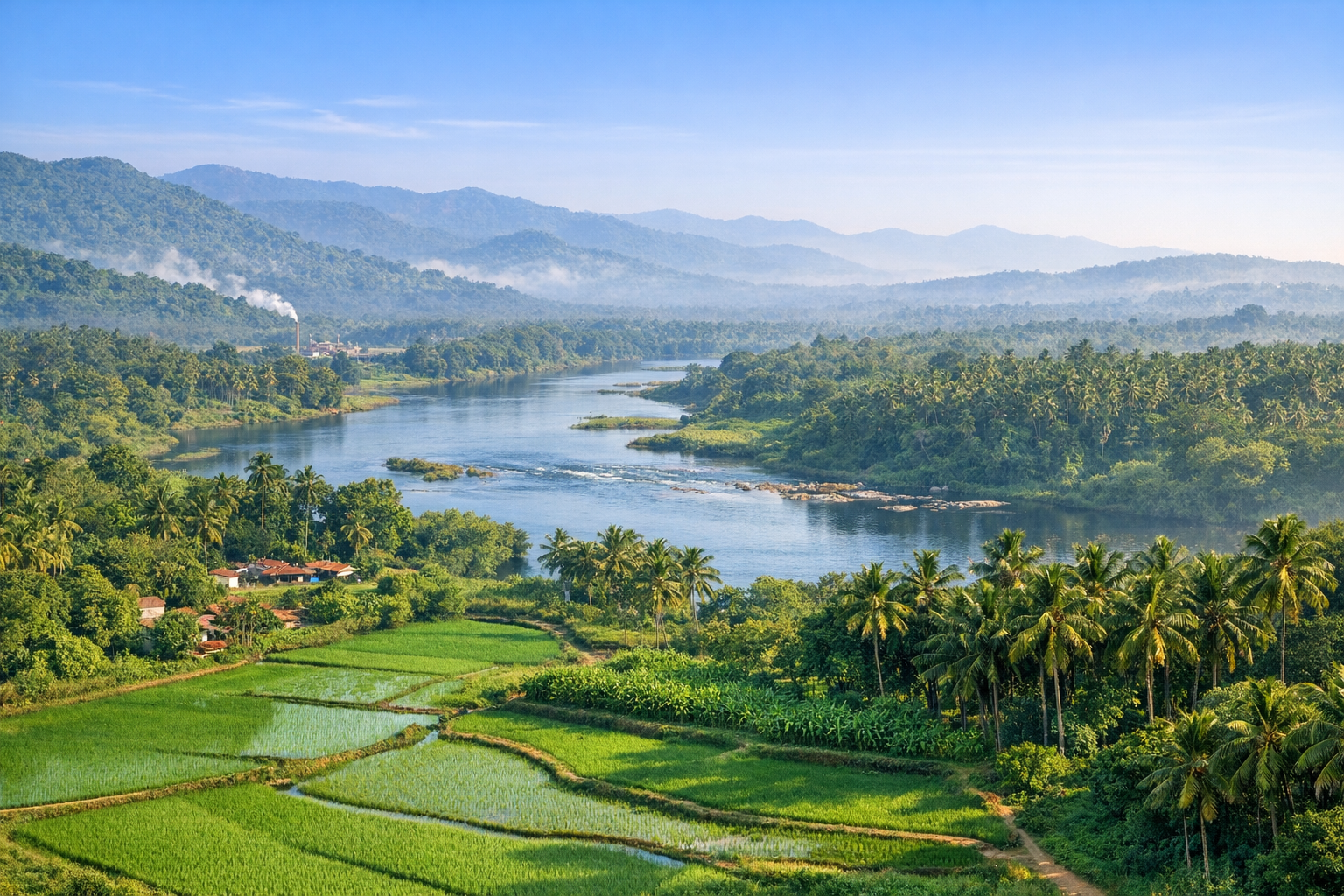
Bhadravati is located in the central part of Karnataka, approximately 20 km from Shivamogga city and about 250 km from Bengaluru. The town lies at an elevation of around 597 meters above sea level, giving it a moderate and pleasant climate compared to coastal regions.
The presence of the Bhadra River provides fertile soil, supports agriculture, and contributes to water resources for industries and households. The surrounding terrain includes forests, hills, and river valleys, influenced by the Western Ghats ecosystem.
The climate is generally tropical, with warm summers, moderate winters, and substantial rainfall during the southwest monsoon, which enhances greenery and agricultural productivity.
Population and Demographics
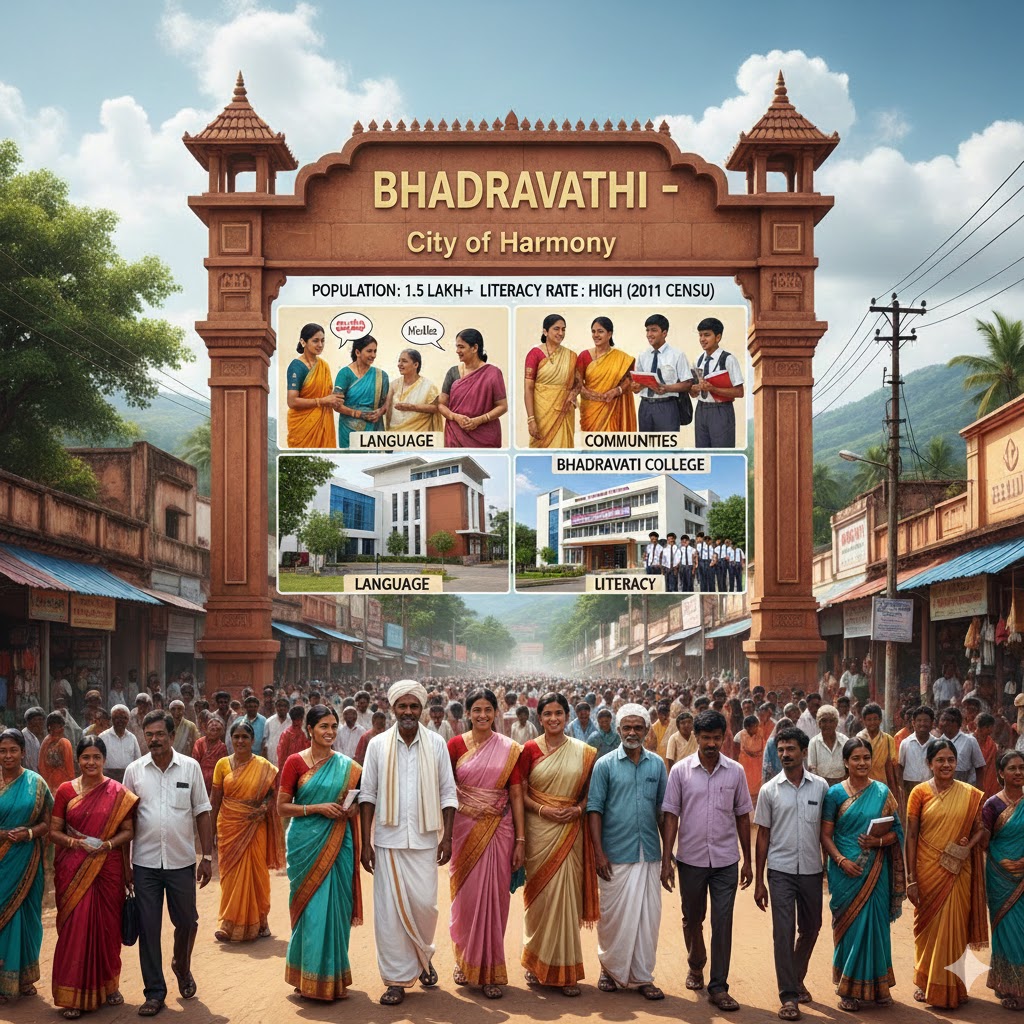
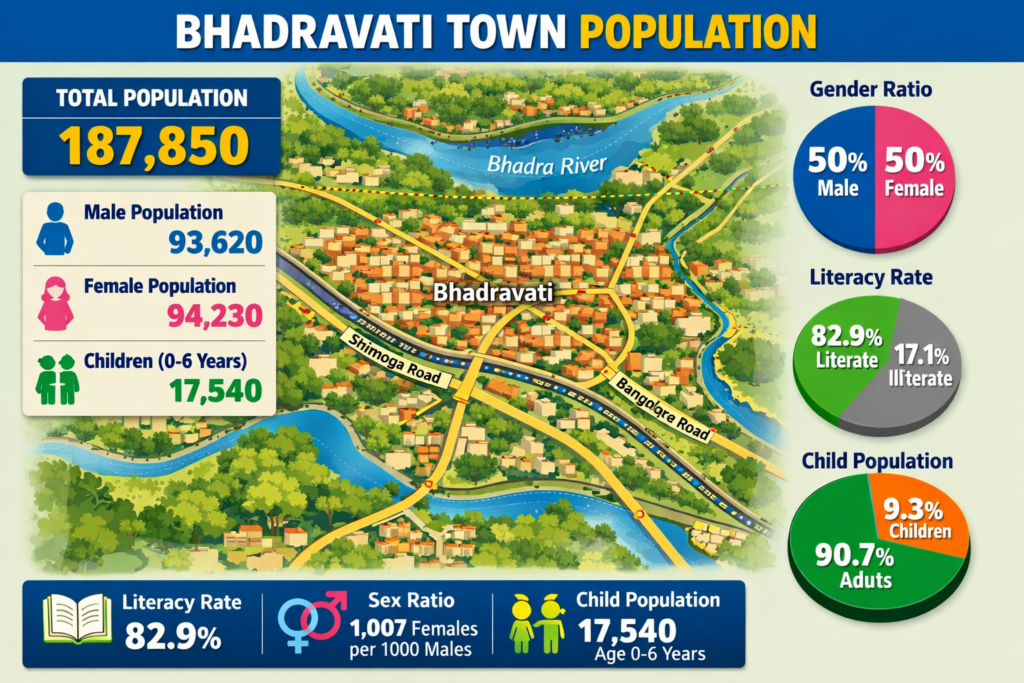
Bhadravati is one of the most populous towns in Shivamogga district. According to the 2011 Census, the town had a population of over 1.5 lakh residents, with a high literacy rate compared to many other towns in the region.
Language: Kannada is the primary language, while English, Hindi, and other regional languages are also spoken.
Communities: The town is home to a diverse mix of communities, reflecting Karnataka’s cultural harmony.
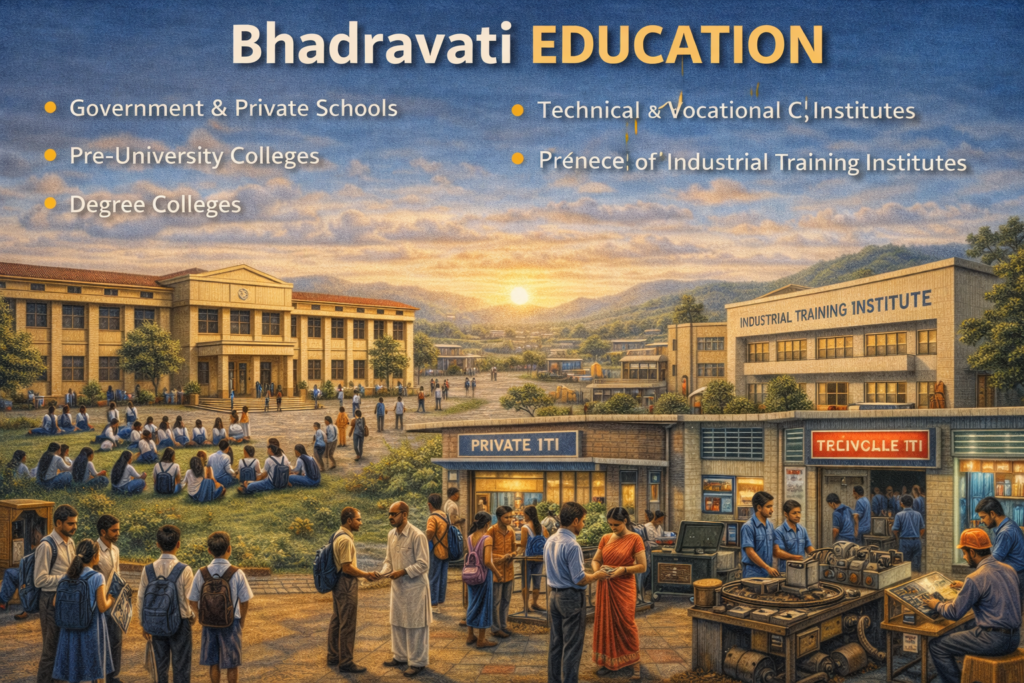
Literacy: Educational awareness is relatively high, supported by schools, colleges, and vocational institutions.
Economy and Industrial Importance
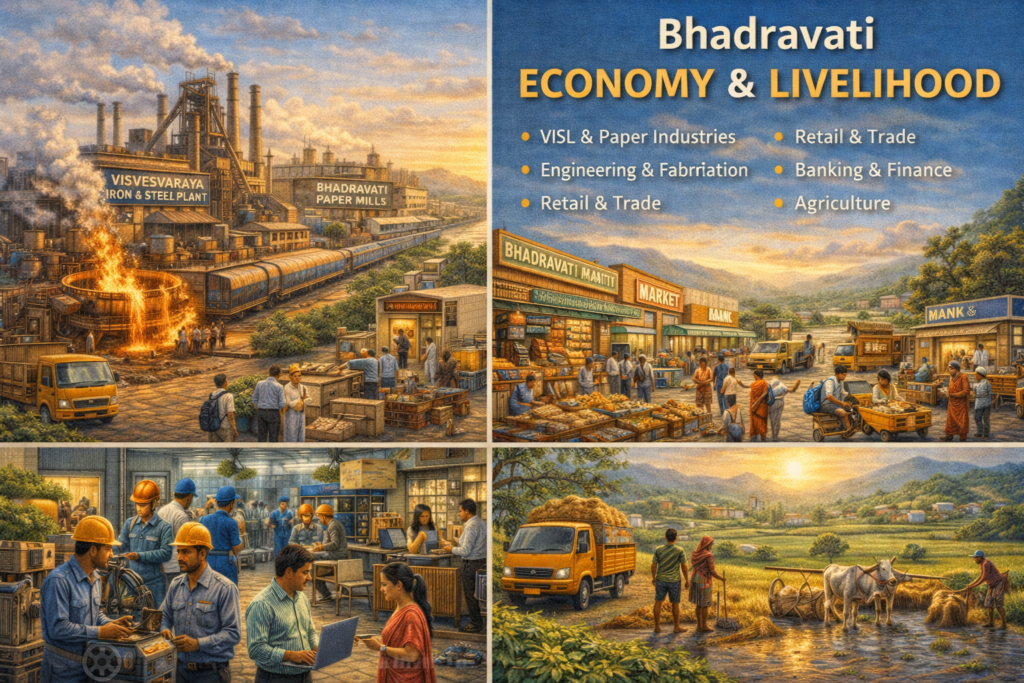
Bhadravati is widely recognized as an industrial hub of central Karnataka. Its economy has historically been driven by heavy industries, particularly iron, steel, and paper manufacturing.
Key Industries
Visvesvaraya Iron and Steel Plant (VISL): One of India’s oldest steel plants, named after Sir M. Visvesvaraya, contributing significantly to employment and regional development.
Paper and allied industries: Historically supported by forest resources and river water.
Small and medium enterprises (SMEs): Including engineering units, fabrication, logistics, and service-based businesses.
Culture, Heritage, and Lifestyle
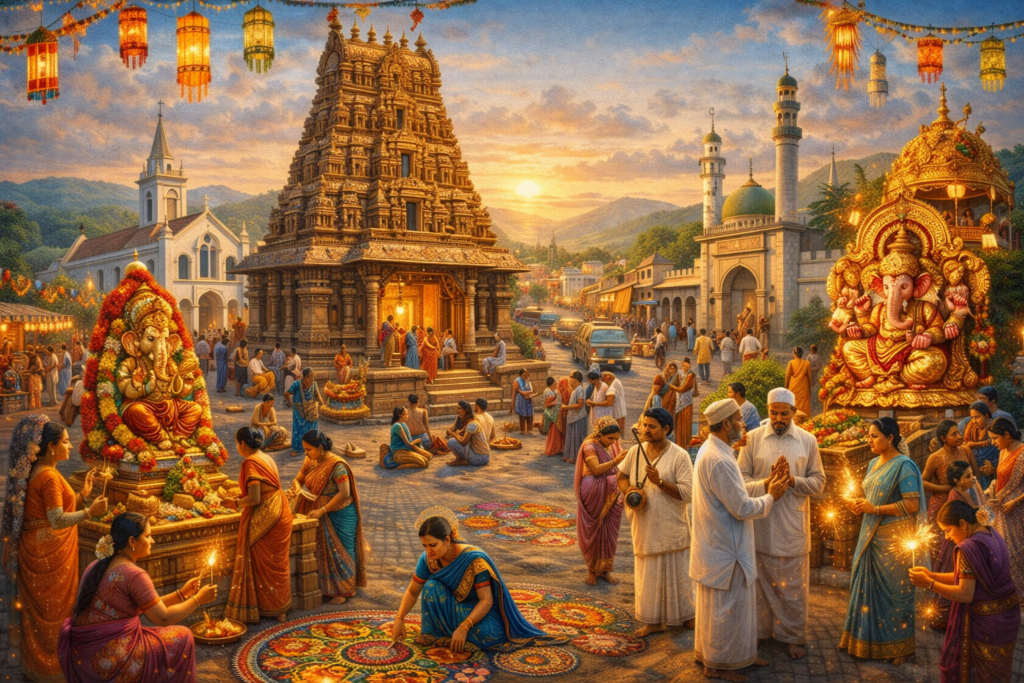
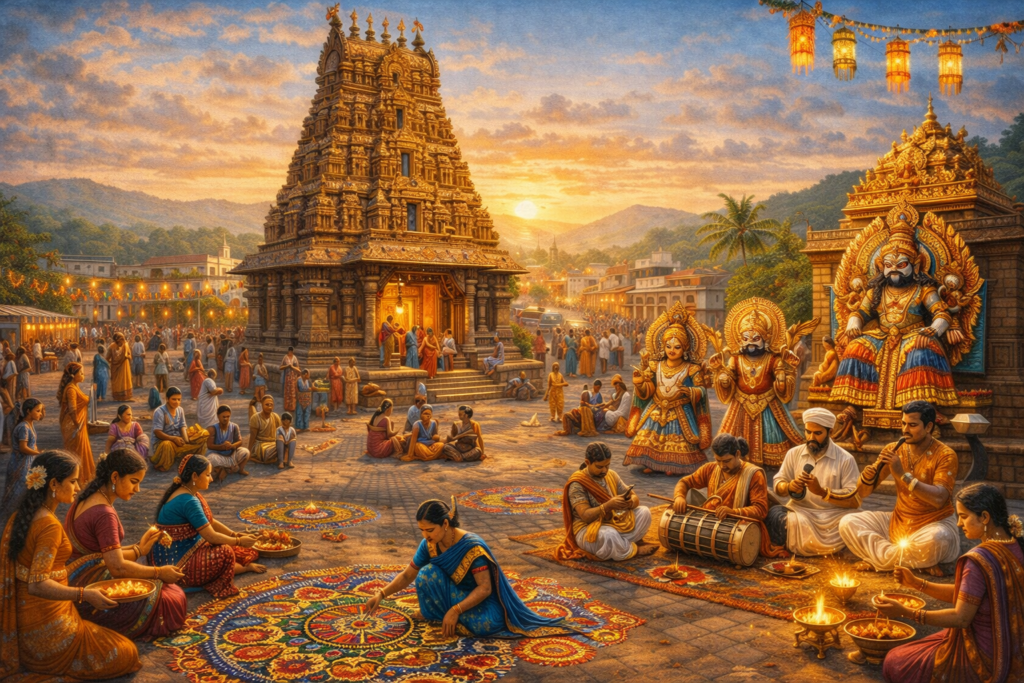
Despite its industrial identity, Bhadravati has a strong cultural foundation. Traditional festivals such as Ugadi, Deepavali, Ganesh Chaturthi, and Sankranti are celebrated with enthusiasm. Religious harmony is reflected through temples, mosques, and churches across the town.
The Lakshmi Narasimha Temple stands as a cultural and architectural landmark, attracting devotees and history enthusiasts alike. Local art forms, folk music, and community events continue to preserve the town’s cultural roots.
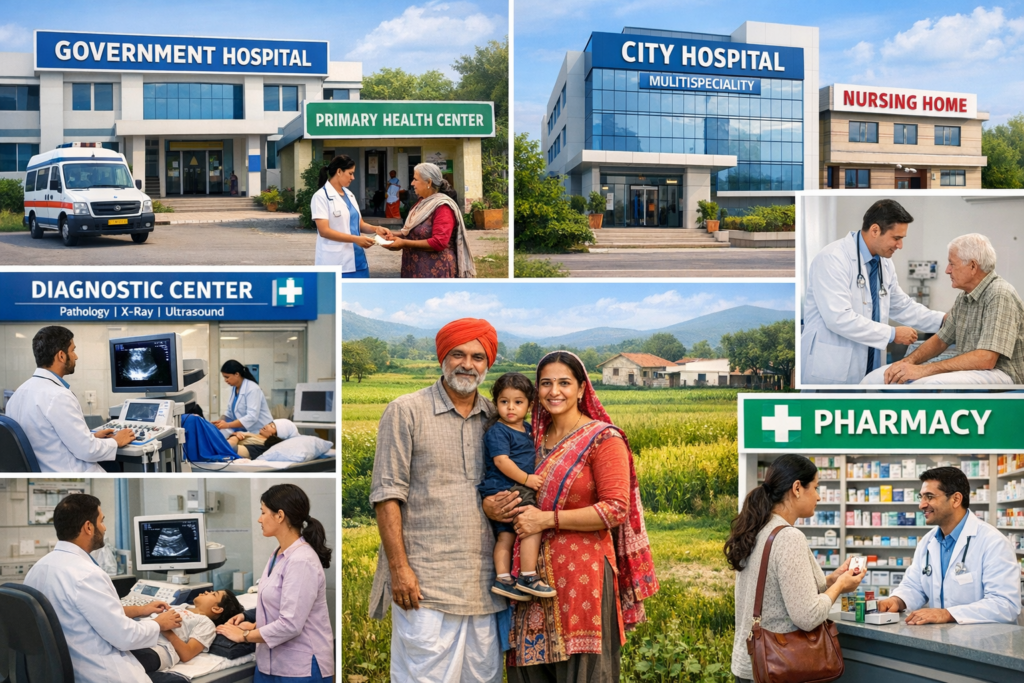
Education and Healthcare
Infrastructure and Urban Development
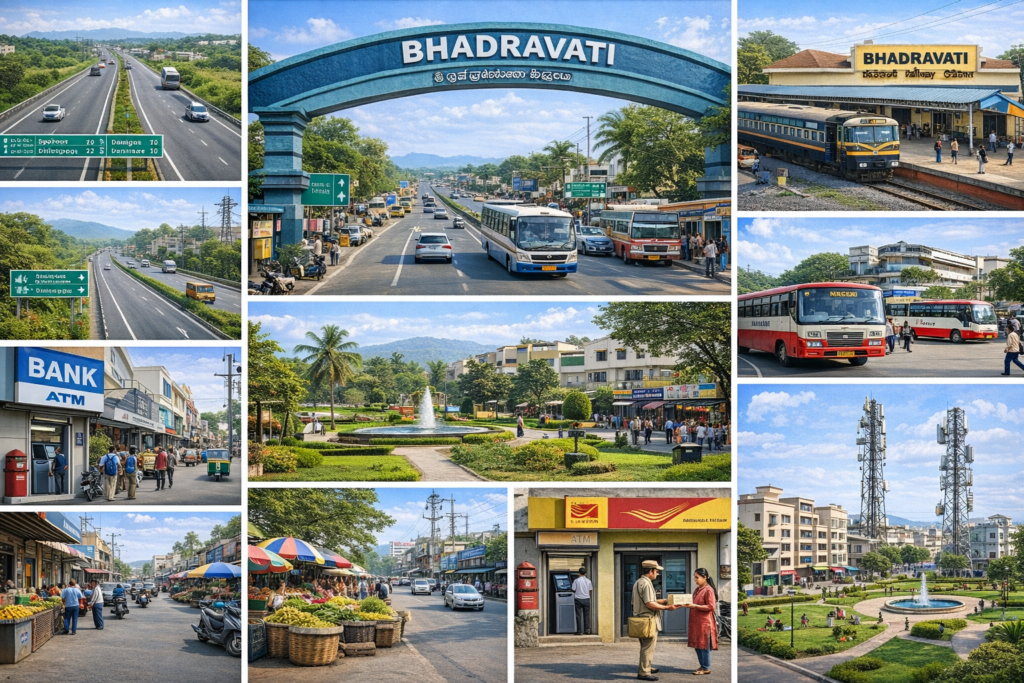
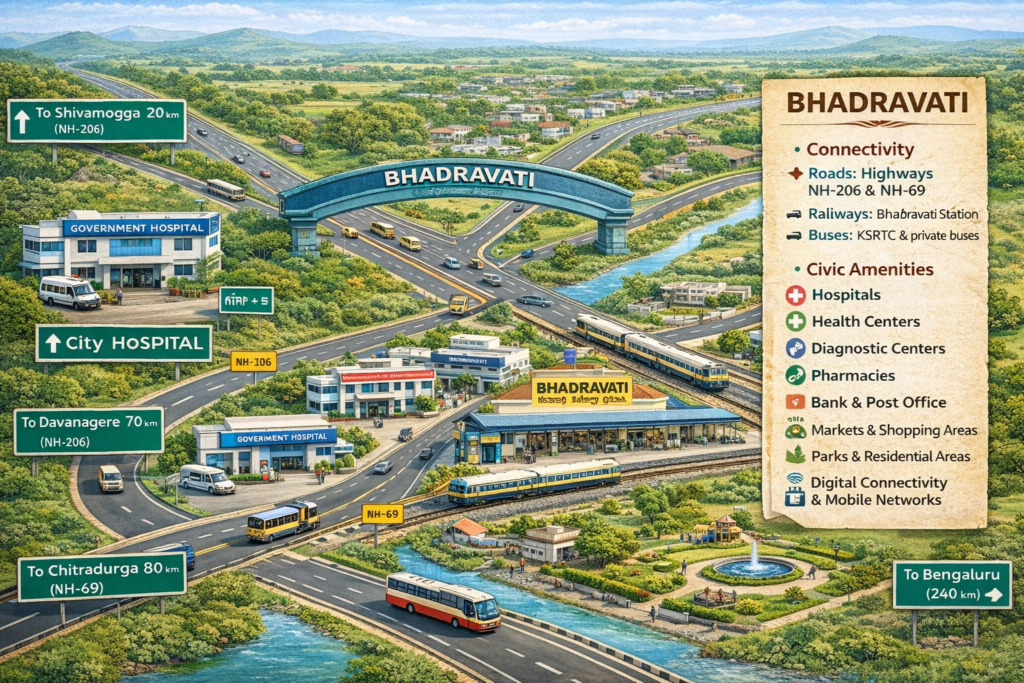
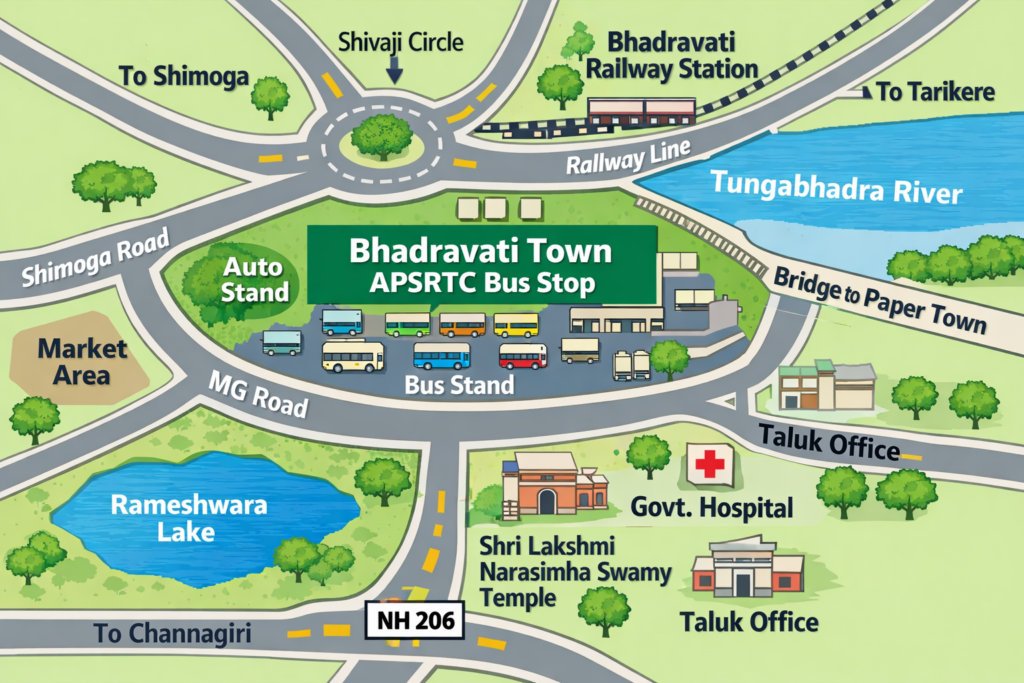
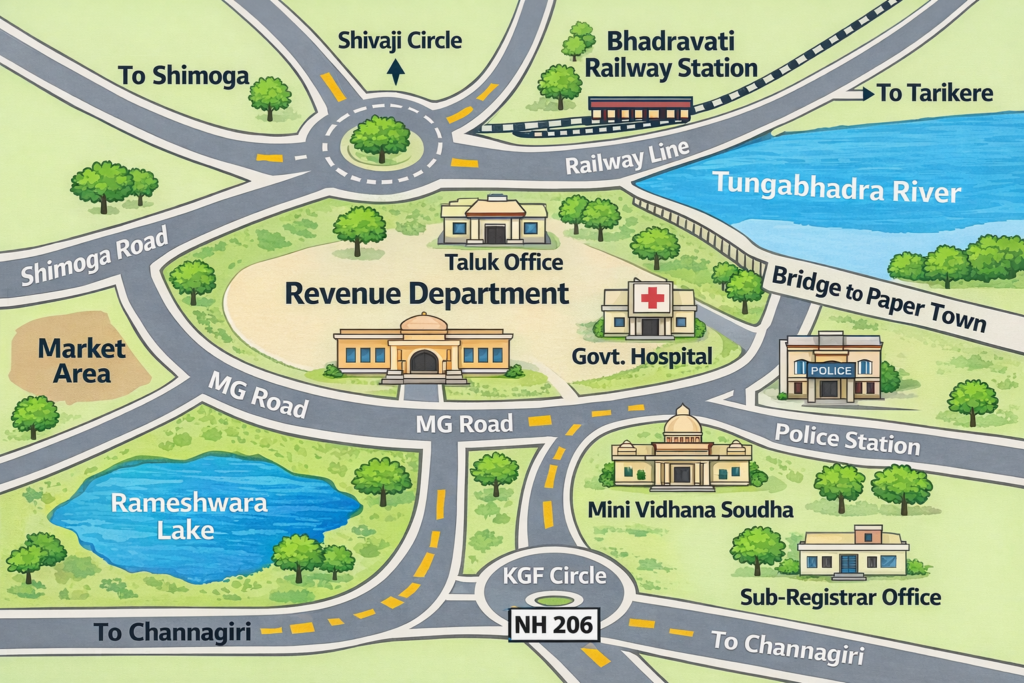
Bhadravati has steadily developed its civic infrastructure while maintaining its industrial character. Connectivity Roads: Well connected to Shivamogga, Chitradurga, Davanagere, and Bengaluru Railways: Bhadravati Railway Station links the town with major Karnataka cities Public Transport: KSRTC and private buses Civic Amenities Reliable electricity and water supply Banking and postal services Digital connectivity and mobile networks Markets, parks, and residential layouts.
Tourism and Nearby Attractions
Though primarily industrial, Bhadravati is strategically located near several tourist destinations:
Bhadra Dam
Bhadra Wildlife Sanctuary
Western Ghats hill ranges
Jog Falls (within district reach)
Nature lovers and weekend travelers often use Bhadravati as a base for exploring these attractions. the above content used to generate image